
During the week of November 17-21, 2025, the research team met for a knowledge exchange workshop in Beawar, Rajasthan, India. During the week, the research team brought its interdisciplinary expertise, bringing many lenses to the research questions, including:
– How can skills, tacit knowledge, materiality and digital innovation come together within a contemporary craftsmanship paradigm to address the challenges encountered by craft communities?
– How do mechanisation, innovation and technologies create both opportunities and challenges for re-framing craftsmanship in Indian crafts?
– What can digital innovation developments and methods learn from working with craft communities about developing ethical and sustainable research and practice?
– How can emerging concepts which connect Indian craftsmanship, digital innovation and sustainability be effectively communicated to key stakeholders and new audiences?
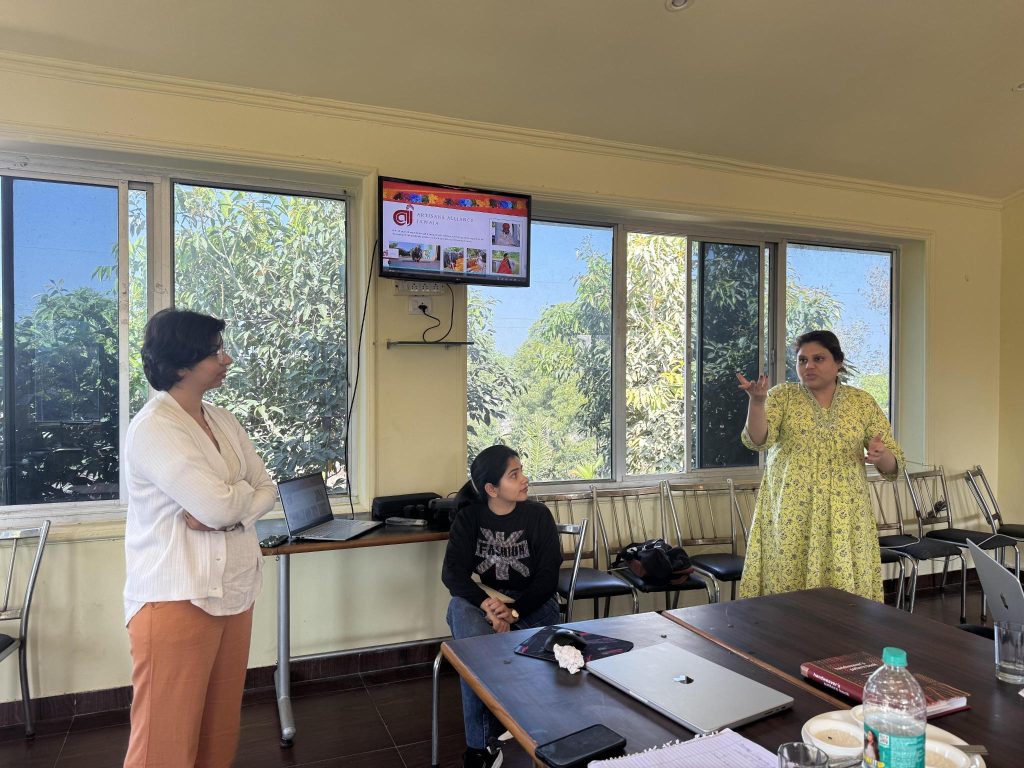
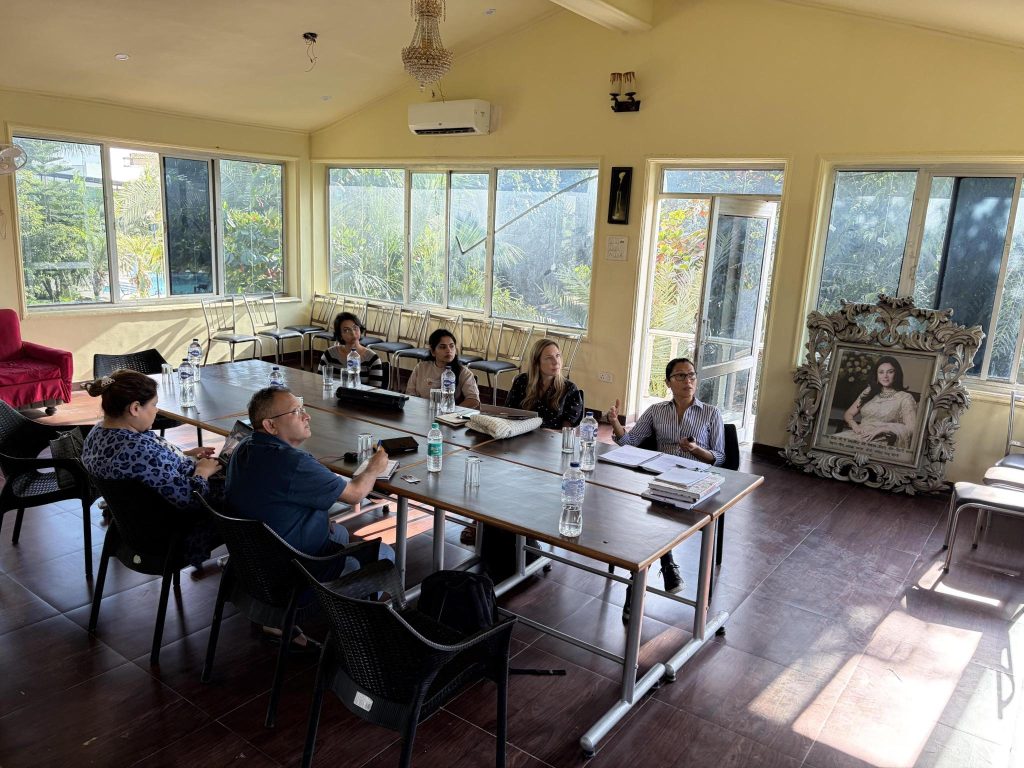
Reflecting on these questions, the team engaged in a variety of activities. This involved knowledge exchange on design-thinking approaches for communities to innovate despite constraints. The team reflected on the importance of capacity-building activities to enhance knowledge and technical skills. Beyond capacity building, wider skills are required by communities of creative industries, including 1) Leadership, cohesion, and trust; 2) Resilience, reflectivity, and continuous learning to avoid repeating mistakes; as well as 3) Openness to thinking out of the box, adaptable to change, open to getting new perspectives and taking risks. Some of these ideas were tested with artisan communities in Jawaja through practical workshops.
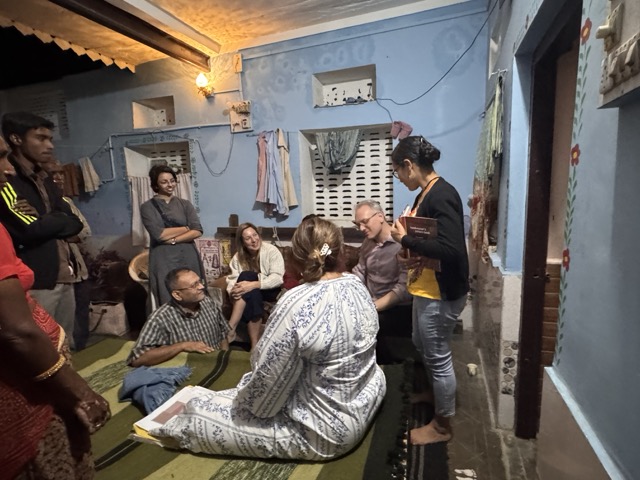
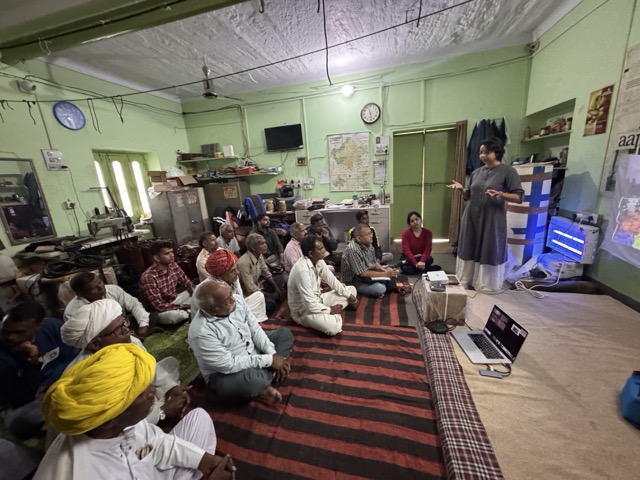
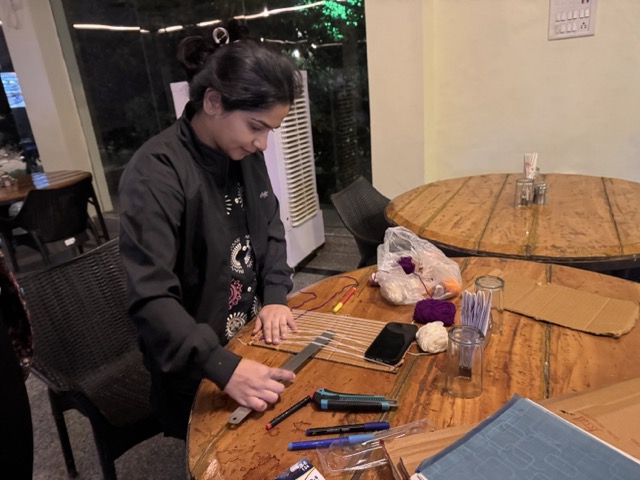
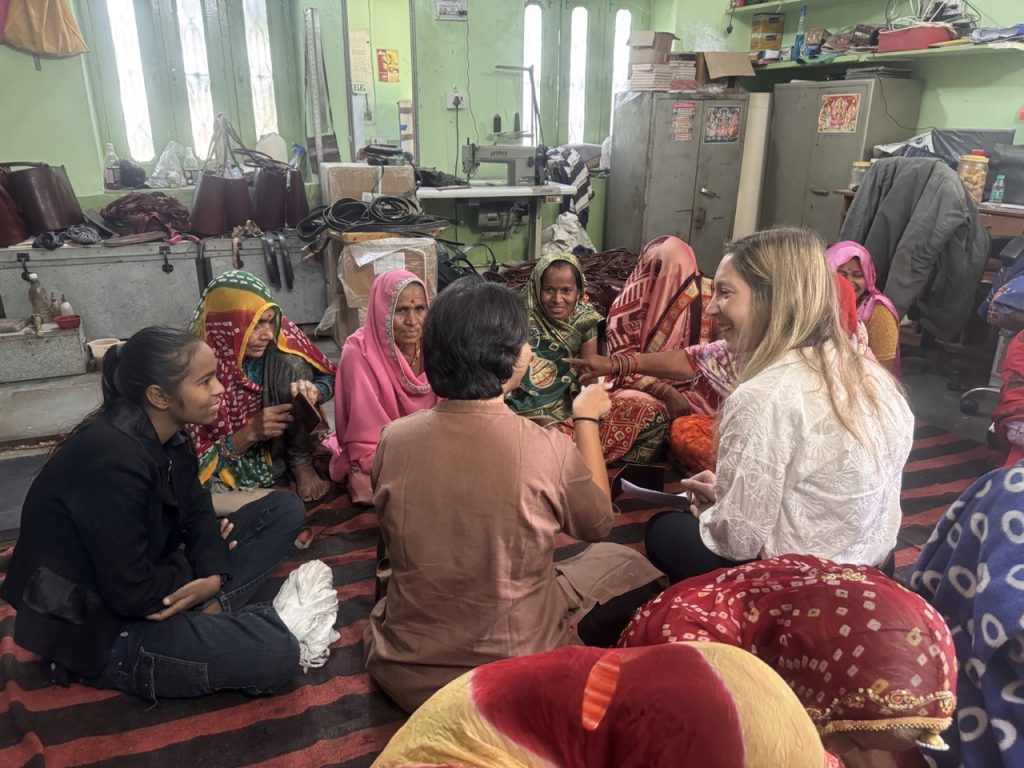
The team also explored digital innovations to support processes and communicate with audiences, including customers. For this, the team had the chance to get in-depth knowledge of crafting processes and test ideas with artisans on innovations that could be co-developed with the team.
Above all, the team reflected on the craft practices the project addresses, the opportunities offered by a globalised, digital and highly interconnected world, as well as the social, human, and historical context in which craft practices develop within rural communities in India. The artisan communities in Jawaja brought a great degree of enthusiasm, knowledge, warmth, and a focus on short- and medium-term impact to these ideas.
In the coming months, the outcomes of this visit will support the continued development of our co-development approach to the research through exciting activities planned as a result of this workshop.