In October 2024, members of the team attended the conference Making Futures 2024 in Plymouth UK, which explored how artists, artisans, designers and others are researching across disciplines and communities toward a more equitable, sustainable and resilient world. The programme involved various sessions exploring various aspects of sustainability: aesthetics and place, AI matter, against extraction, and future crafts.
During the event, the team gained insights into how craft has long been a symbol of cultural heritage, representing the tangible and intangible aspects of human history. More than just objects, this material culture reflect the desires, traditions, and needs of their users. In this context, craft is often a collaborative process, where craftsmanship is often passed down through generations, preserving invaluable skills and techniques.
The presentations also explored how building material literacies amongst consumers can offer new insights into crafting processes, creating opportunities for makers and consumers to engage more deeply with the cultural significance of craft. For this, the journeys of materials used in crafts will take centre stage —where they come from, how they are sourced, offering insights into their sustainability and opening opportunities for eco-conscious craft practices.
Mapping the skillsets and technologies within communities were also a critical aspect which was discussed. This helps to understand how skills evolve and adapt. By identifying who holds which skills, it is possible to support the preservation of traditional knowledge while also fostering innovation in craft-making techniques.
At the heart of many talks during the event lies a commitment to ethical practices. It was highlighted that the focus should be on sustainability, livelihood, and the well-being of the communities involved. By embedding ethical principles into every aspect of craft production, from material sourcing to community collaboration, it is possible to ensure that craft continues to thrive in a way that benefits both people and the planet.
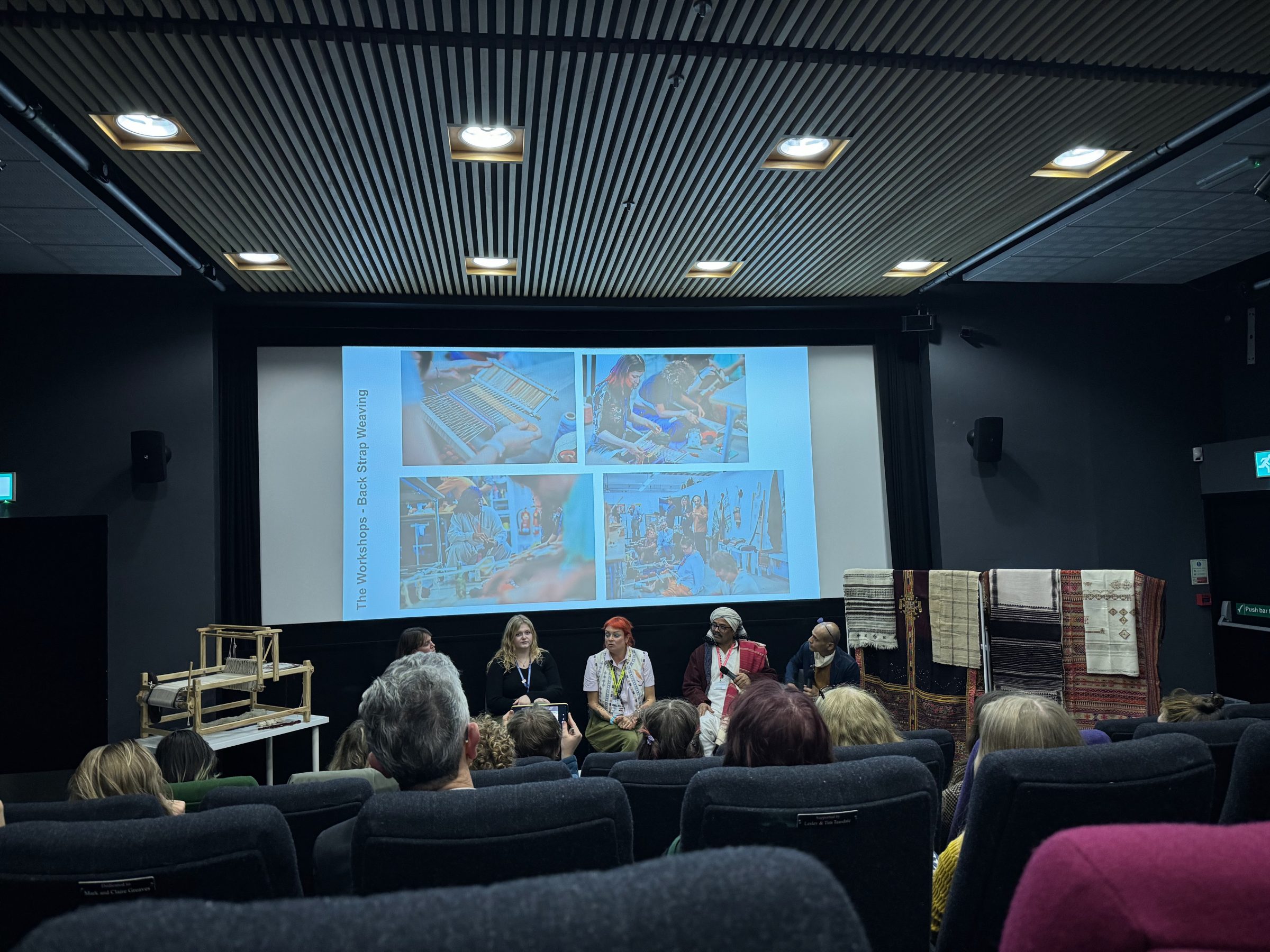
The programme included various presentations with researchers engaging with Indian artisans, including a roundtable “Beyond Objects: Emergent Knowledge between India and UK” (see featured image). This project, sponsored by the British Council in partnership with Arts University Plymouth and the Delhi Crafts Council, India. The University Plymouth hosted Shamji Vankar, master weaver from the Kachchh region in north India and the session discussed the knowledge exchange between Shamji and Textile Design staff and students.
Based on the contacts developed and many insights gained on other research projects, our research offers an exciting opportunity to explore how craft as material culture bridges the past and future, embracing both tradition and innovation. By focusing on the product, landscape, societal ecosystems, materiality, skills, tools, literacy, and ethical practices, we hope that project will uncover new ways for Indian craft to remain a vital and evolving part of cultural heritage in the modern world.